
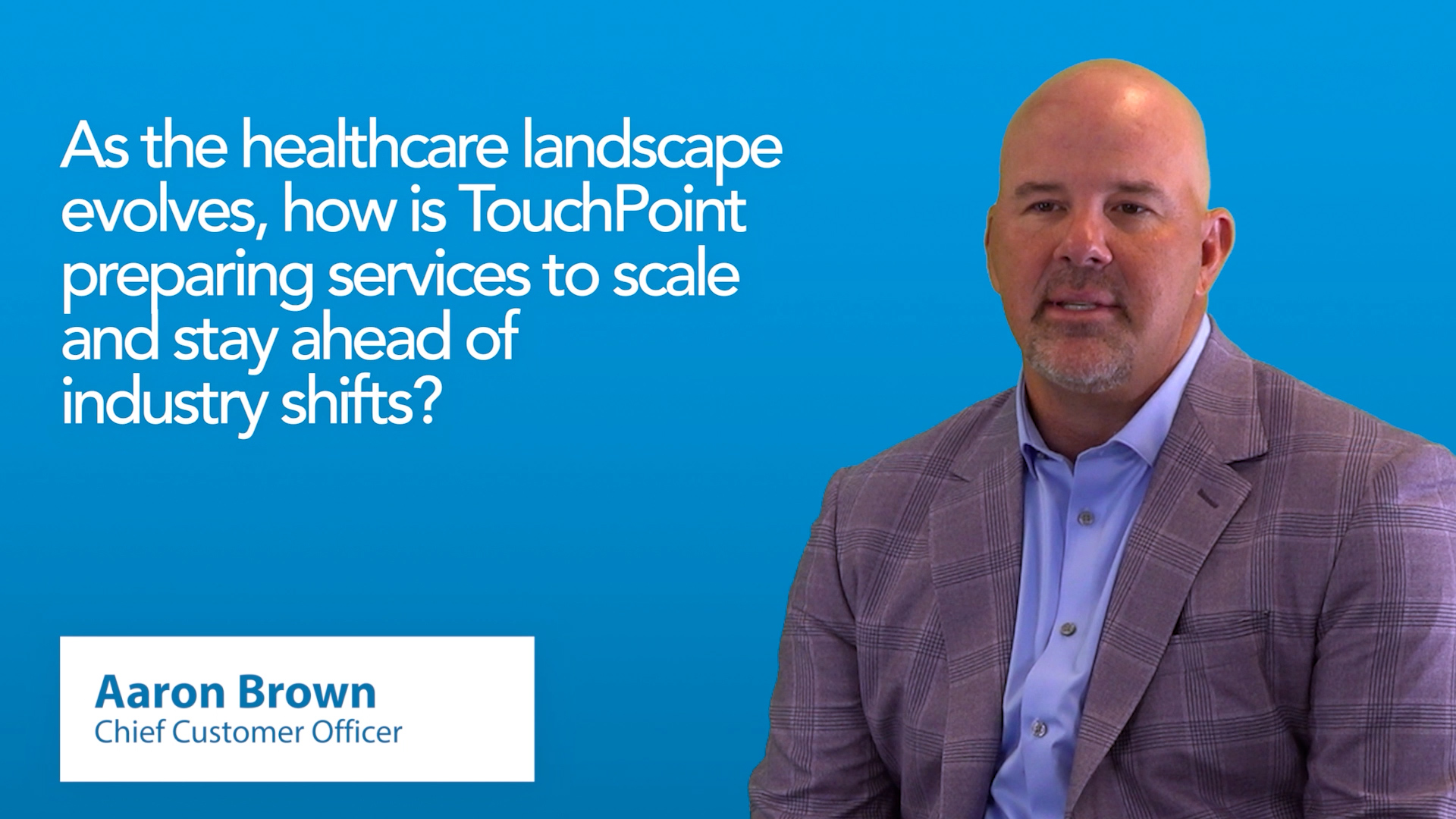
Scalability is key. When we first started Touchpoint, we opened 151 hospitals in 18 months. In order to do that and do that effectively for one customer, we had to be able to scale quickly. In order to scale quickly, we had to be standardized. So if you start with a standardized turnkey operating platform that you know that works, you know what the costs are going to be and you know what the outcomes are going to be, it’s much easier to scale than going to each hospital and having a bespoke offering. It’s not to say that our offering cannot change, but we start with a good base that allows us to give our customers the fastest way to scale and the best way to have predictive costs.
I think future-proofing our partners is one of the things that we are ahead of the market in now. We are constantly looking at things that are going to make us better. But if we can be the tip of the spear to bring innovation into healthcare in our services, I think that’s how we future-proof our customers. We’re always pushing them to be better every day. We like to look at our business model of being a constant evolution. So for us to do that, we have to look at how do we make the job easier? How do we bring in technology? How do we continue to focus our culture and be better each day? It’s a simple mantra, be better tomorrow than you are today.
Relationships are built upon trust. So once that trust is established, you’ve got to look at your business partner, somebody as your trusted advisor. I don’t look as Touchpoint as just a support services provider. I look at us as a strategic business partner. So for us, we know healthcare is going to change. And for us to be with our business partners talking about where their strategy is, where they’re going, we have to be able to be flexible. And with our organization, it’s big enough at 14,000 people to get the job done, but we’ve cut out a lot of the red tape and bureaucracy. We’re a very flat organization from a leadership level, and that allows us to make quick decisions and be very flexible for our clients.
Meeting the expectations of today, I think, is important, but also understanding where our customer wants to go in the future and helping be a strategic partner for them of asking those questions, where are the gaps? When you’re talking with your customer, if you have a trust-based relationship, you’re delivering on the expectations of today, you can drive those expectations of the future just by being flexible to help your customer out. We are always here to do the best for our customers, our patients, and our caregivers.